Hug a Dinosaur Today: A Designer's Review
As someone who spends more time staring at stitch maps than most people care to admit, I approach new design assets with a mix of excitement and skepticism. We have all been there: you buy a cute graphic online, load it into your software, and realize halfway through stitching that the density is all wrong or the details are too fine for the fabric you chose. That is why I took a close look at the Hug a Dinosaur Today T-shirt Design before committing it to a real project. This isn't just about whether the image looks good on a screen; it is about how it translates into thread, how it holds up on a handmade product, and whether it can carry the weight of a commercial sale.
The Visual Personality and First Impressions
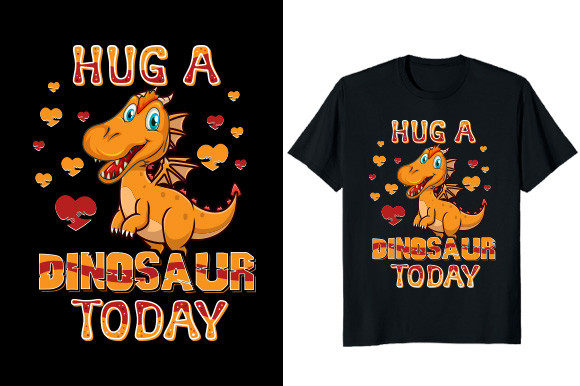
The first thing that strikes me about this design is its inherent warmth. The concept of hugging a dinosaur immediately sets a playful, affectionate tone. It bridges the gap between prehistoric coolness and gentle comfort, making it an ideal candidate for baby embroidery or children's apparel. Visually, the layout feels balanced. In many digital files, text and imagery fight for dominance, but here the typography seems to support the central character rather than overpowering it. For an embroidery project, this is crucial. If the text is too small or too close to the main graphic, you risk thread bleeding or lost definition once the needle hits the fabric.
The mood created is one of whimsical nostalgia. It fits perfectly into the current trend of retro-inspired, slightly quirky graphics that perform well on Etsy and in boutique shops. However, as a reviewer, I have to look past the cute factor. The line work appears clean in the provided mockups, which suggests that if converted correctly into a machine embroidery design, it could utilize a nice mix of satin stitch for the outlines and fill stitch for the body of the dinosaur. The key will be managing the transition between these stitch types to ensure the texture of the thread enhances the image rather than muddying it.
Real-World Application: The Sweatshirt Test
To truly evaluate this file, I imagined a specific scenario: a custom order for a local boutique needing a run of cozy sweatshirt embroidery for the upcoming holiday season. The client wanted something unisex that appealed to both kids and adults who love dinosaurs. The Hug a Dinosaur Today T-shirt Design seemed like the perfect fit.
In this context, the design shines because of its scalability. On a adult-sized sweatshirt, the hug motif becomes a statement piece on the chest or a large back print. The emotional connection of the "hug" theme elevates it from a simple graphic to a personalized gift with sentiment. Customers are not just buying a shirt; they are buying a feeling of comfort. When I visualize the finished product, I see high-quality cotton fleece providing a stable base. The texture of the fleece would interact beautifully with the stitches, giving the dinosaur a tactile, soft appearance that invites touch.
However, success here depends on execution. If you are an Etsy seller or running a craft business, you cannot rely solely on the JPG or PNG previews. You need to ensure the underlying vector data (EPS or SVG) is robust enough to be digitized properly if it isn't already in a native embroidery format. The description mentions EPS and SVG files, which is excellent news for us. It means we can take these T-Shirt Designs and adjust the sizing or separate layers before sending them to our digitizing software or embroidery machine.
Navigating Fabric Challenges and Stitch Density
Every designer knows that a design that looks great on a flat tote bag might fail miserably on a curved cap. With the Hug a Dinosaur Today T-shirt Design, you need to be mindful of where you place it. For custom apparel like t-shirts and tote bags, the flat surface allows for maximum detail retention. But if you attempt this on a structured hat or a stretchy knit, you must consider the stitch density.
Dense areas, particularly in the dinosaur's body or the lettering, can cause puckering on thin or stretchy fabrics. My advice is to always test the design on scrap fabric first. If you are working with a dark fabric, check your thread colors carefully. A light-colored dinosaur on a navy background needs a solid underlay to prevent the fabric from showing through the stitches, which can ruin the crispness of the image. Conversely, on light fabrics, ensure your backing or stabilizer is invisible or matches the thread color to maintain a professional look.
Small details are another potential pitfall. If the design includes tiny claws, eyes, or intricate parts of the text, these might not translate well if the hoop size is too small or if the resolution of the original Graphics file is low. While the product description highlights a high-resolution PNG (4500×5400 at 300 dpi), remember that raster images do not scale infinitely for embroidery without losing quality. Always prefer the EPS or Adobe Illustrator CS6 files for resizing, as these are vector-based and will keep your lines sharp regardless of how big or small you make the embroidered patch or garment print.
Commercial Viability and Brand Consistency
For those using this for commercial embroidery or POD businesses, the licensing terms are the first thing to verify. The description states it is suitable for POD and personal use, which opens up significant opportunities for small shop products. However, "POD business" usually implies printing, whereas embroidery is a different beast. Ensure that your specific use case—selling physical embroidered goods—is covered under the license you purchase. Nothing kills a small business faster than a copyright claim on a best-selling item.
From a branding perspective, this design offers high "giftability." It is the kind of image that stops a scroll on social media. When customers see a well-executed version of this design, it builds trust in your craftsmanship. It shows that you understand current trends while maintaining high production standards. Whether you are creating holiday embroidery for Christmas gifts or nursery decor for a baby shower, the consistency of the visual style helps build a recognizable brand identity.
Practical Notes for the Studio
Before you start stitching, here are a few final checks to ensure your project succeeds:
- Check the File Formats: Confirm you have the EPS or SVG files for editing. Do not rely solely on the JPG for production.
- Test Contrast: Run a black-and-white mockup to see if the design holds its shape without color reliance.
- Stabilizer Selection: Choose a stabilizer that matches your fabric weight. Heavy fill areas may require a cut-away stabilizer for durability.
- Wash Testing: If selling finished items, wash the sample multiple times to ensure the stitches do not loosen or the fabric does not pucker.
- License Confirmation: Double-check the specific terms regarding resale of physical goods versus digital redistribution.
In conclusion, the Hug a Dinosaur Today T-shirt Design has strong potential as a versatile asset for creators. Its charm lies in its simplicity and emotional resonance, but its success in the real world depends on thoughtful digitization and material selection. By treating it with the care it deserves—respecting the limits of fabric and thread—you can turn this digital file into a standout finished product that customers will love to wear and cherish.